
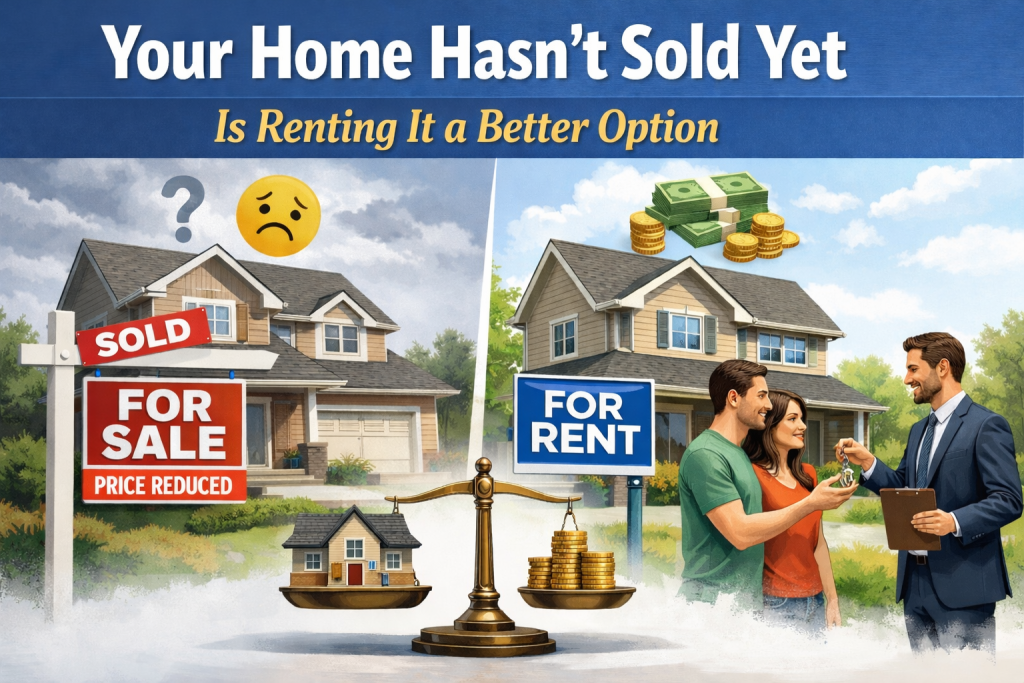
When a home lingers on the market longer than expected, it’s easy for frustration to set in. What starts as simple waiting can quickly turn into doubt: Is the price too high? Is the market slowing down? Did I miss the ideal window? Eventually, many homeowners begin to consider a practical—but more complex—alternative: renting the property instead.
At first glance, renting can seem like a convenient backup plan. However, what’s often overlooked is that becoming an “accidental landlord” is a much bigger commitment than it initially appears.
The Growing Trend of Accidental Landlords
More and more homeowners are finding themselves in this position—planning to sell, struggling to find buyers, and shifting toward renting instead.
While it may feel like a setback, it’s actually a common scenario. A rising number of unsold homes are quietly entering the rental market, reflecting changing conditions where expectations don’t always align with demand.
Still, before making the same switch, it’s important to carefully assess whether renting is truly the right fit for your situation.
1. Can Your Property Succeed as a Rental?
Not every home is well-suited for renting, and that distinction matters.
Consider key factors such as:
- Location: Is there strong rental demand in the area?
- Condition: Does the home need repairs or upgrades before it’s rentable?
- Competition: How many similar rental properties are nearby?
- Rental income: Will rent cover your expenses, or come close?
Rental success depends heavily on local supply and demand. High demand and limited supply can push rents up, while an oversaturated market can have the opposite effect.
The important point is this: just because you can rent your home doesn’t necessarily mean you should.
2. Are You Prepared to Be a Landlord?
This is where expectations often meet reality.
Being a landlord is frequently mistaken for passive income, but in practice, it requires ongoing involvement and responsibility, including:
- Emergency maintenance and repair calls
- Handling tenant concerns or disputes
- Dealing with late or missed payments
- Covering repair costs
- Preparing the home between tenants
Even with a property manager, you remain financially and legally responsible. It takes time, patience, and comfort with unpredictability.
3. Have You Looked at the Full Financial Picture?
Renting is more than just collecting monthly rent—it comes with ongoing costs that can add up quickly.
Common expenses include:
- Higher insurance costs for rental properties
- Property management fees (often around 10% of rent)
- Regular maintenance and repairs
- Marketing and tenant placement costs
- Vacancy periods where expenses continue but rent does not
For some homeowners, these costs are manageable and part of a long-term investment strategy. For others, they can outweigh the benefits.
A realistic, numbers-first approach—without overly optimistic assumptions—is essential before deciding.
Before You Decide: Reconsider Your Selling Approach
If your home hasn’t sold, renting isn’t always the only alternative.
The issue may be related to:
- Pricing that doesn’t align with current market conditions
- Weak listing photos or presentation
- Limited marketing exposure
A discussion with your real estate agent may reveal ways to better position your home. Often, small improvements can significantly improve buyer interest.
Final Thoughts
Renting out your home can be a smart strategy—but only when it fits your financial situation, long-term goals, and willingness to manage the responsibilities involved.
If you’re leaning toward renting simply because your home hasn’t sold, it’s worth reassessing first. Consider the full scope of costs, effort, and risk.
Because while renting can be a great solution for some, for others it can create more complexity than relief.